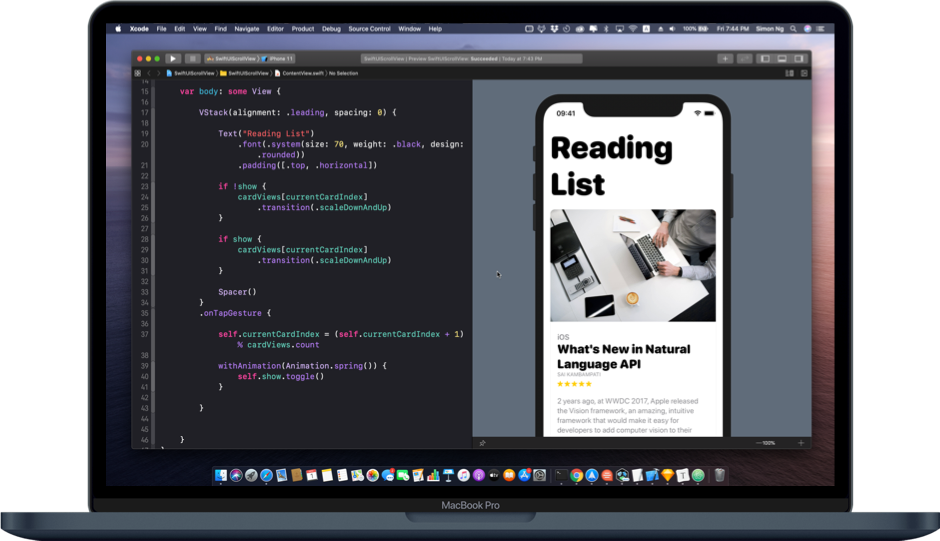
What version of Xcode and iOS do you support?
All the content and source code of the ebooks will support Xcode 26 and iOS 26. Currently, only the Mastering SwiftUI book has been updated for the latest iOS version. We expect we will complete the update for the rest of the ebooks by end of 2025.
Can I pay via PayPal?
Absolutely! After clicking the Buy button, simply select Paypal to proceed with the payment. Alternatively, you can just send the payment in USD to
[email protected]. You'll receive a download link of the package within 24 hours. Or simply email us at
[email protected] and tell us which package you want to buy.
Can I reuse the source code?
Absolutely! You are allowed to reuse the source code in your own projects (personal/commercial). However, you're not allowed to distribute or sell the source code without prior authorization.
Will I get free update?
Yes! The update applies to all packages. Once you purchase the book, you'll receive free lifetime updates. Whenever Apple releases a new version of SwiftUI, we ensure the book supports the latest Swift and Xcode versions.
Do I need to learn Swift before learning SwiftUI?
Yes, you still need to know the Swift programming language before using SwiftUI. SwiftUI is just a UI framework written in Swift. Our "Beginning iOS Programming with Swift" book can help you get started.
Should I learn SwiftUI or UIKit?
The short answer is Both. That said, it all depends on your goals. If you target to become a professional iOS developer and apply for a job in iOS development, you better equip yourself with knowledge of SwiftUI and UIKit. On the other hand, if you just want to develop an app for your personal or side project, you can develop it entirely using SwiftUI. However, since SwiftUI is very new, it doesn't cover all the UI components that you can find in UIKit. In some cases, you may also need to integrate UIKit with SwiftUI.
How can I get the book updates?
Whenever we update the learning materials, we will send you an email notification with the download instructions.
Still have questions?
No problem! Just send your question to
[email protected]. We will do our best to answer them.