1. Standard Tamil Keyboard Layout
High resolution image suitable for printing.
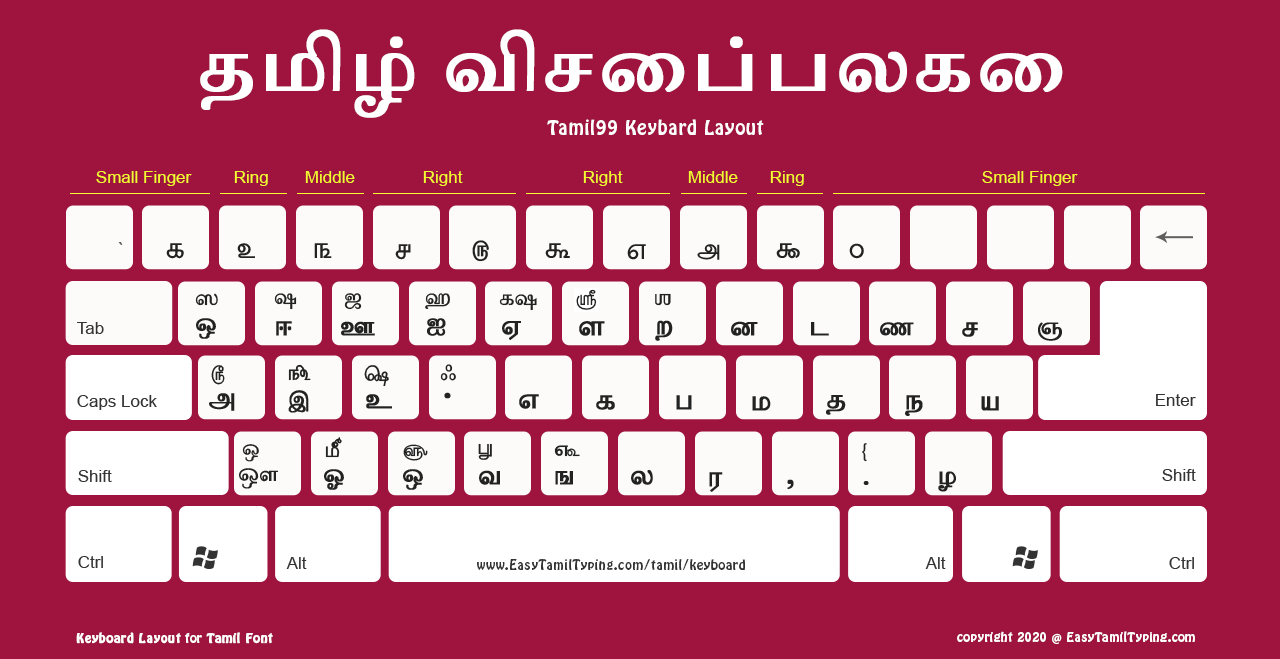
We have five different Tamil keyboard layouts for you to download on your computer. Once downloaded — you can use it as a reference to type in Tamil either on Word document or any other text editor. You also need to download the matching Tamil fonts.
High resolution image suitable for printing.
High resolution image suitable for printing.
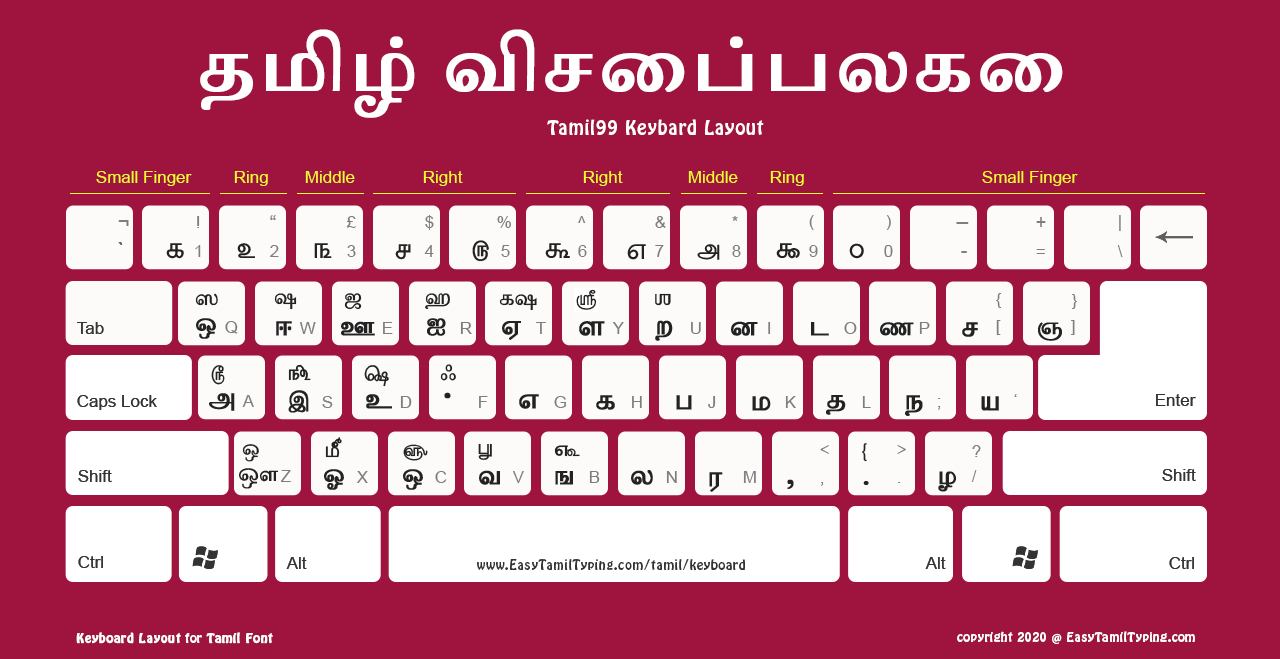
High resolution image suitable for printing.
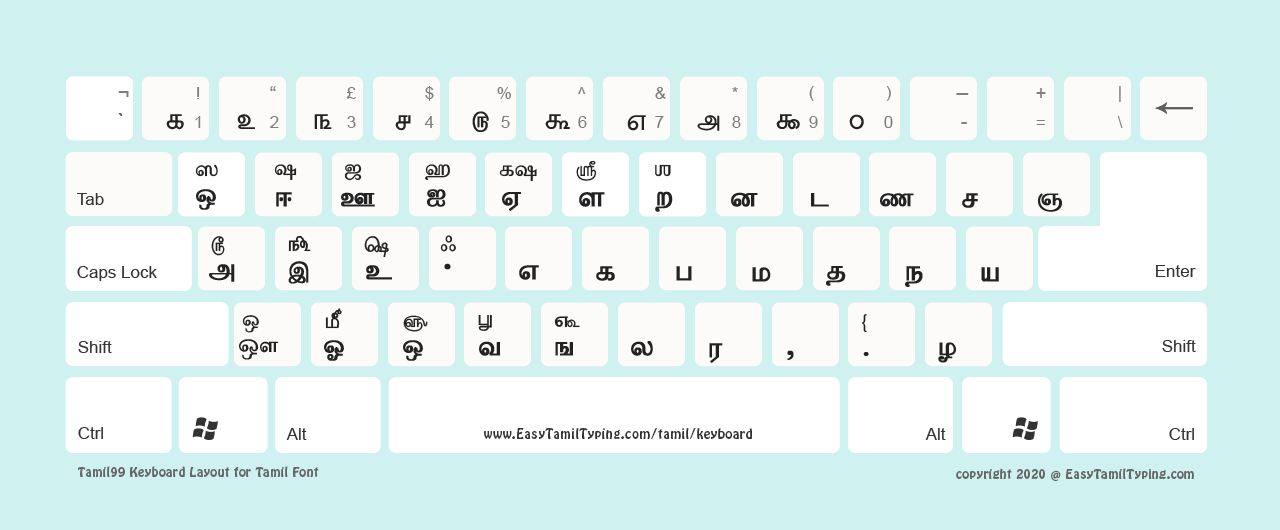
High resolution image suitable for printing.
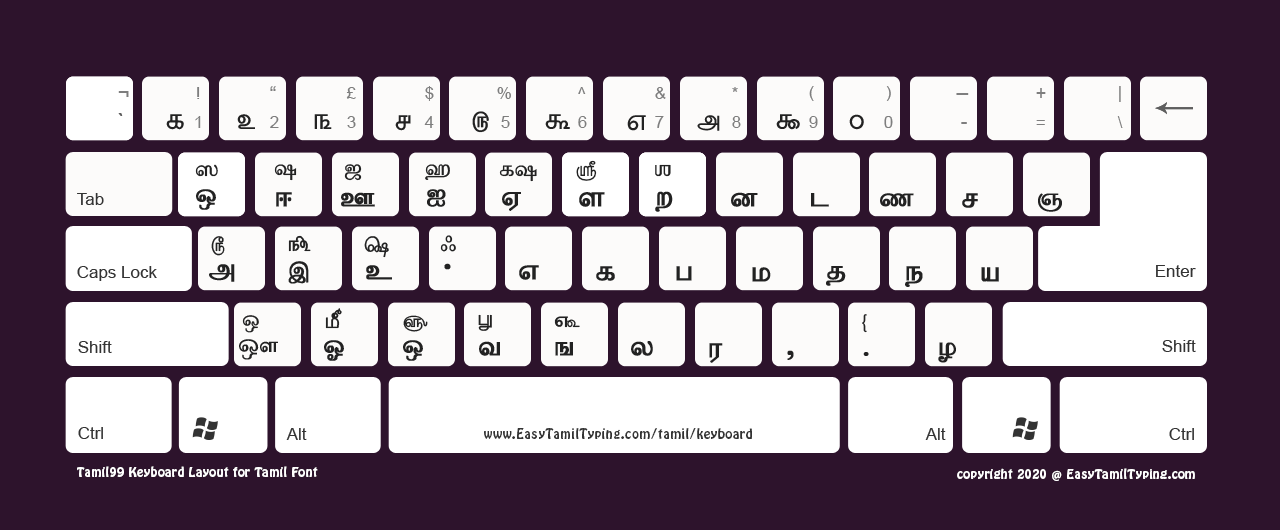
High resolution image suitable for printing.
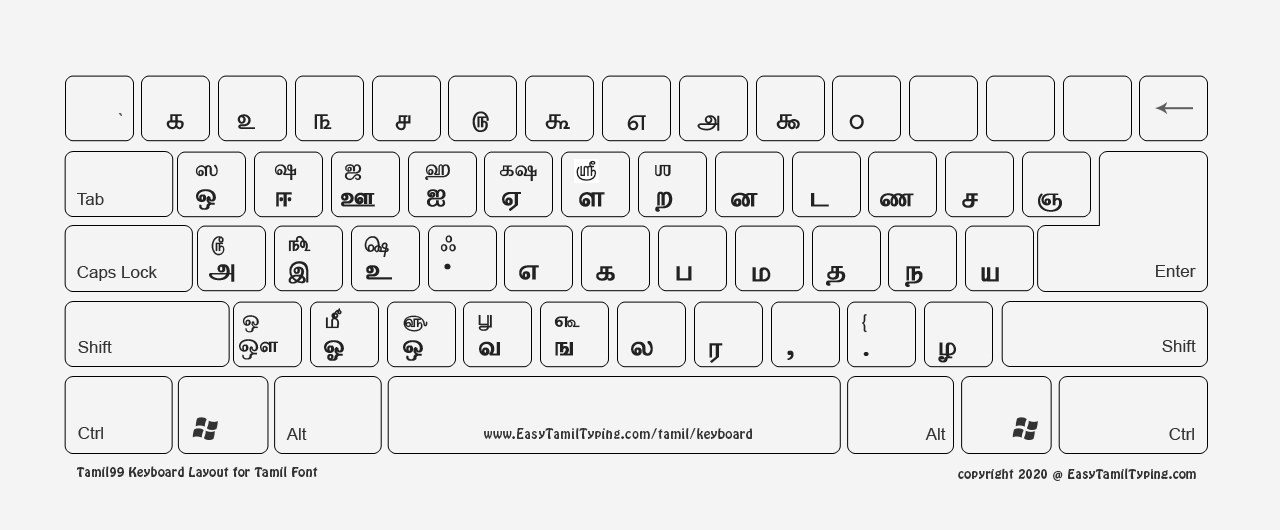
Here's our systematic approach to setting up Tamil typing.
Acquire your Tamil font — browse our curated fonts library and install the ideal typeface for your Tamil writing needs.
Obtain your keyboard reference using this reliable download process:
Click on your preferred keyboard layout from our collection
Right-click when the high-resolution image appears
Choose "Save image as..." and save to your preferred location
Establish your typing environment by opening any word processor and selecting the Tamil font you installed earlier.
Launch your Tamil writing session! Position your keyboard image for easy viewing while you compose beautiful Tamil text.
Expert recommendation: Limited screen space? Our keyboards deliver outstanding print clarity — print one for a reliable desktop reference that's always ready when you need it!
Designed for Tamil99 keyboard layout — accurately mapped to provide an authentic Tamil typing experience with correct character placement.
Meets professional standards — designed for typists, and businesses requiring error-free Tamil documentation.
Supports various display formats — perfect for presentations, reference guides, digital displays, and high-quality printing.
Offers unrestricted licensing — use freely for academic research, commercial projects, educational materials, or personal correspondence.
Despite the "pride" of the umbrella, the transgender community often faces steeper hurdles than their cisgender (LGB) peers.
The transgender community and the broader LGBTQ+ culture are bound by a shared history of resistance, a common fight for civil rights, and a vibrant tapestry of shared spaces. While "LGBTQ+" serves as an umbrella term, the "T" represents a distinct journey of gender identity that has both anchored and revolutionized the movement.
The transgender community is currently leading the most significant cultural conversation of the 21st century: the decoupling of biology from destiny. As Gen Z and Gen Alpha embrace gender fluidity at record rates, the "transgender experience" is becoming less of a niche subculture and more of a blueprint for how everyone—queer or straight—can live more authentically.
The modern LGBTQ+ rights movement didn’t start in boardrooms; it started in the streets, led largely by transgender women of color. Figures like and Sylvia Rivera were at the forefront of the 1969 Stonewall Uprising. At the time, the distinction between "gay" and "transgender" was less rigid in the public eye—everyone who defied traditional gender and sexual norms was grouped together.
In recent years, much of the political friction surrounding LGBTQ+ rights has shifted specifically toward trans-inclusive healthcare and sports.
From the Wachowskis in film to SOPHIE in music, trans creators have pushed the boundaries of "queer art," moving away from tragic tropes toward "trans joy" and futurism. Challenges and Divergent Paths
This shared history created a foundation of solidarity. Transgender people provided the "radical" spark that demanded more than just tolerance; they demanded the right to exist authentically in public spaces. The "T" in the Umbrella: Identity vs. Orientation
To understand this relationship, we have to look at how these communities intersect, the unique challenges trans individuals face, and the cultural shifts they continue to lead. The Historical Anchor: A Shared Fight
 Sambhu Raj Singh ·