Open source RGB lighting control that doesn't depend on manufacturer software


One of the biggest complaints about RGB is the software ecosystem surrounding it. Every manufacturer has their own app, their own brand, their own style. If you want to mix and match devices, you end up with a ton of conflicting, functionally identical apps competing for your background resources. On top of that, these apps are proprietary and Windows-only. Some even require online accounts. What if there was a way to control all of your RGB devices from a single app, on both Windows and Linux, without any nonsense? That is what OpenRGB sets out to achieve. One app to rule them all.


Version 1.0rc2, additional downloads and versions on Releases page

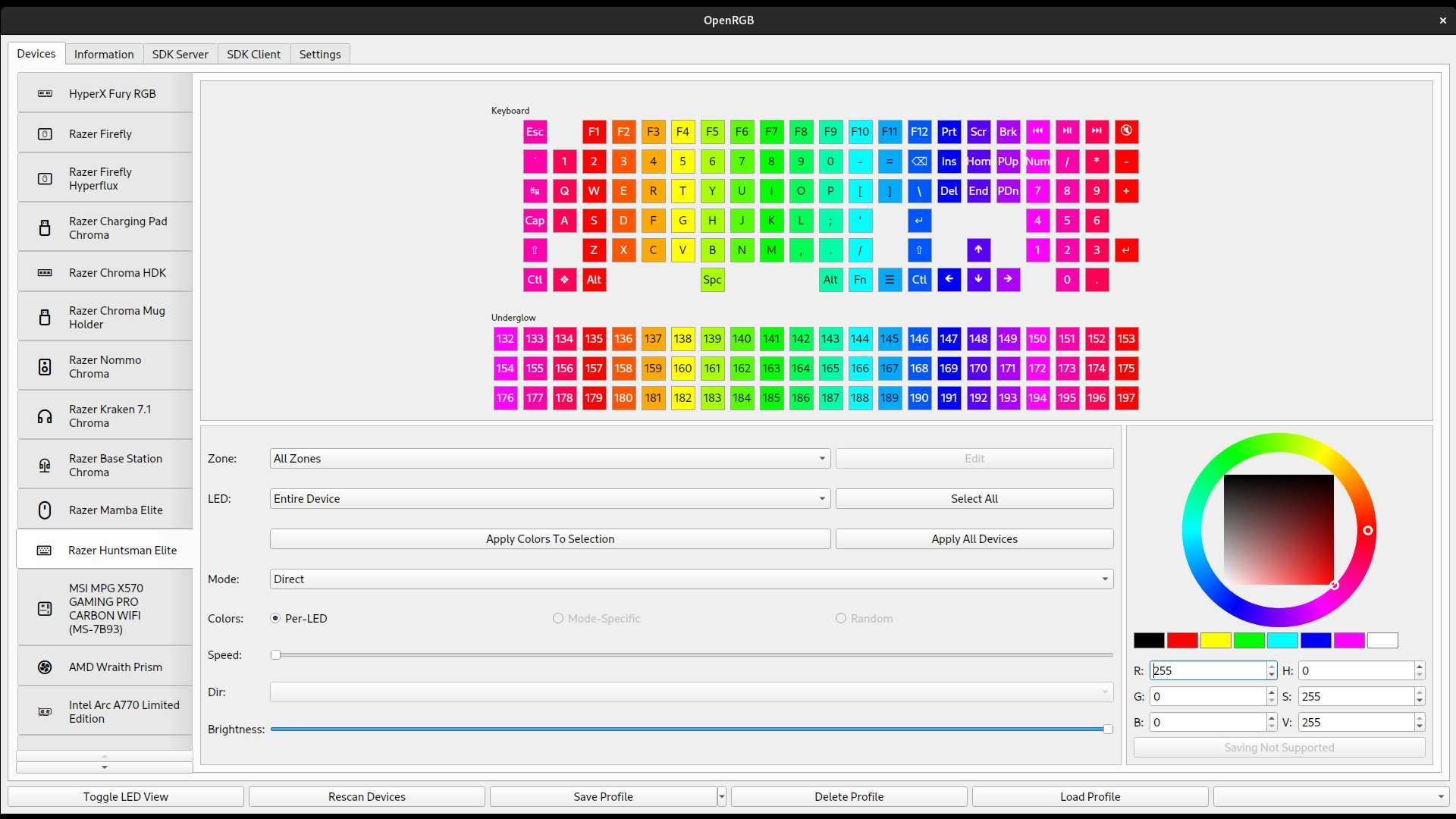
OpenRGB user interface

Control RGB without wasting system resources

Lightweight User Interface

OpenRGB keeps it simple with a lightweight user interface that doesn't waste background resources with excessive custom images and styles. It is light on both RAM and CPU usage, so your system can continue to shine without cutting into your gaming or productivity performance.

OpenRGB rules them all

Control RGB from a single app

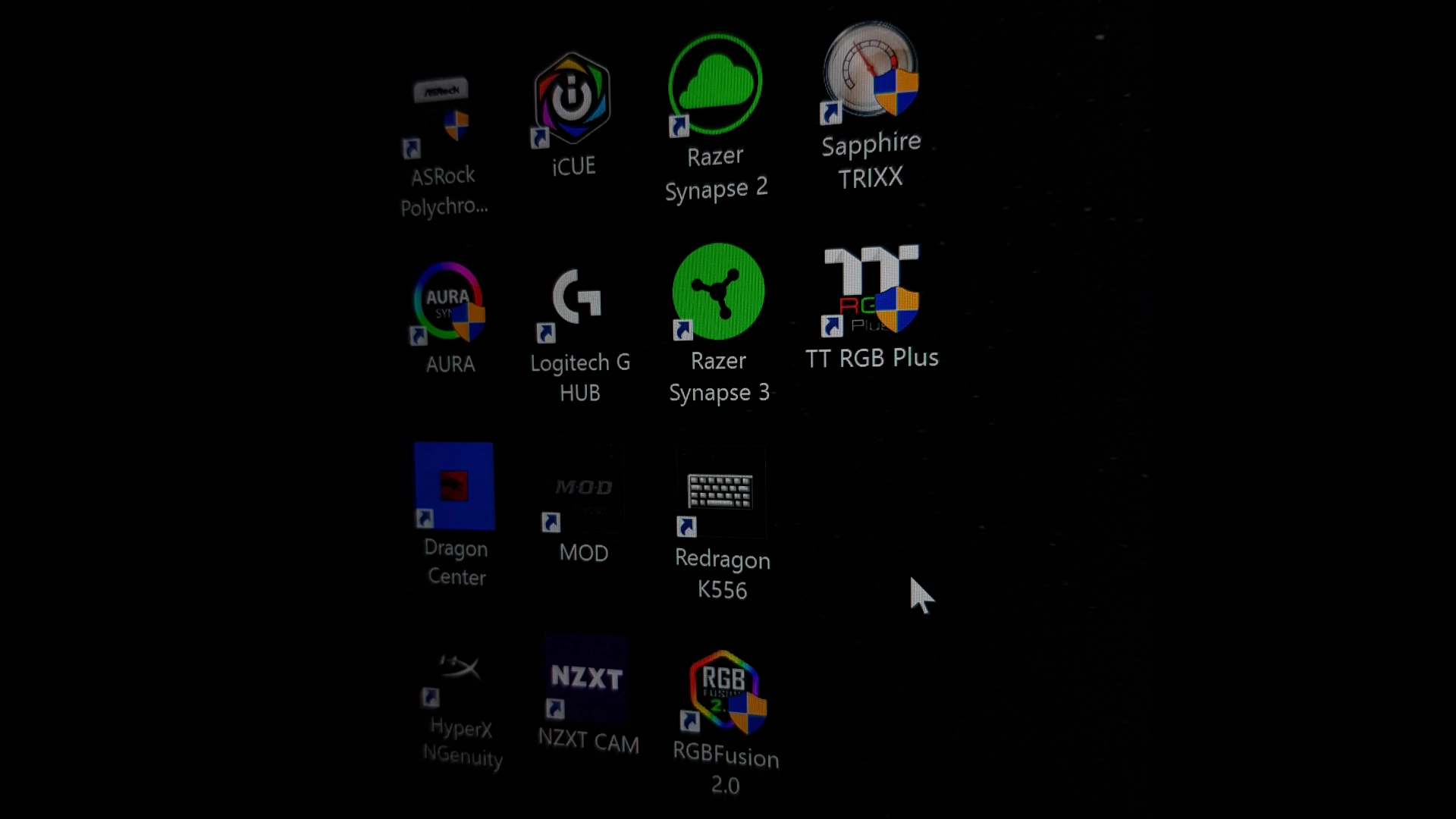
Eliminate Bloatware

If you have RGB devices from many different manufacturers, you will likely have many different programs installed to control all of your devices. These programs do not sync with each other, and they all compete for your system resources. OpenRGB aims to replace every single piece of proprietary RGB software with one lightweight app.

OpenRGB is open source software

Contribute your RGB devices

Open Source

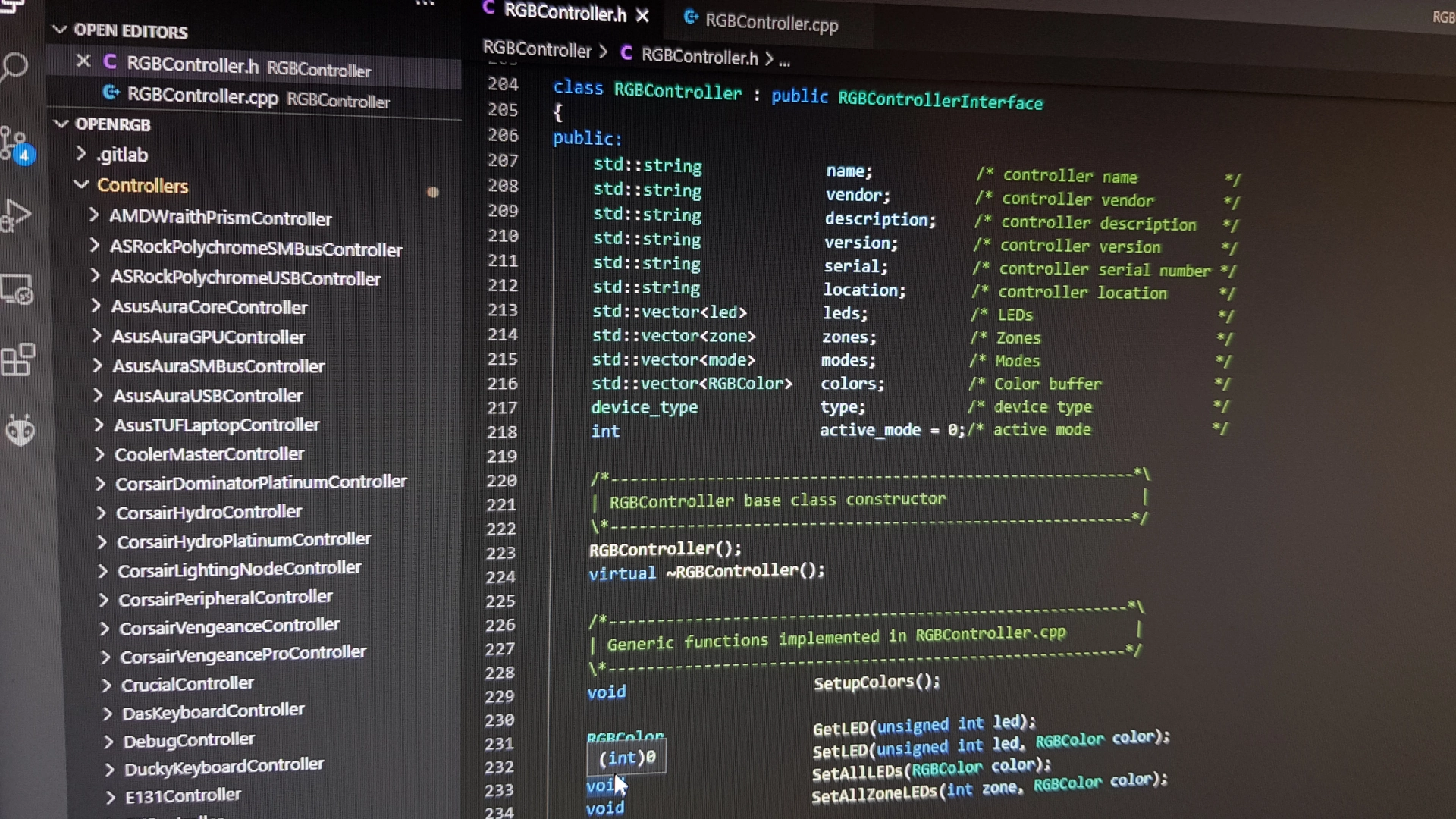
OpenRGB is free and open source software under the GNU General Public License version 2. This means anyone is free to view and modify the code. If you know C++, you can add your own device with our flexible RGB hardware abstraction layer. Being open source means more devices are constantly being added!


Check out the source code on GitLab
OpenRGB is Cross-Platform

Control RGB on Windows, Linux, and MacOS

Cross-Platform

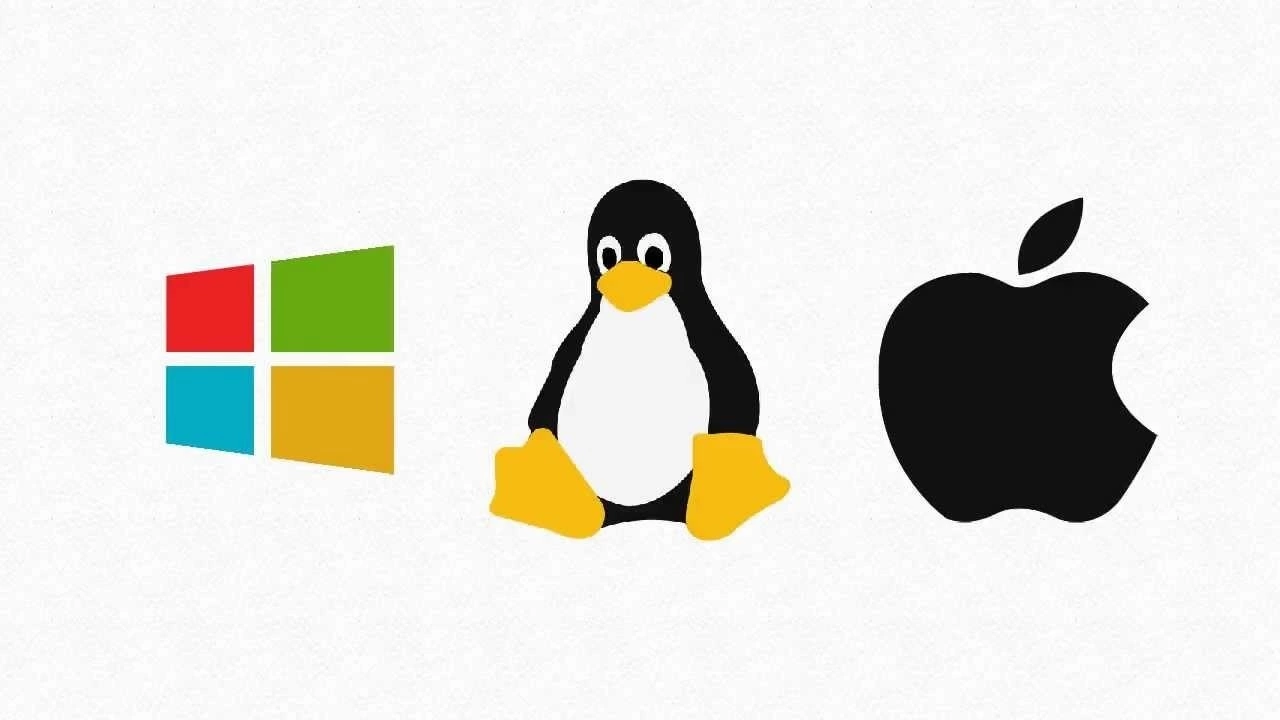
OpenRGB runs on Windows, Linux and MacOS. No longer is RGB control a Windows-exclusive feature! OpenRGB has been tested on X86, X86_64, ARM32, and ARM64 processors including ARM mini-PCs such as the Raspberry Pi.

Imagenes Anime Xxx May 2026

Are you looking to use these visuals for a , like a blog, a social media campaign, or perhaps a deep dive into marketing trends ?

High-end brands like Gucci, Loewe, and Louis Vuitton have collaborated with anime houses (e.g., Studio Ghibli or Sailor Moon ) because the imagery carries a specific "cool factor" that traditional photography sometimes lacks.

The "anime style" is now a dominant genre in the gaming industry. Titles like Genshin Impact and Honkai: Star Rail use high-end anime visuals to create immersive worlds that feel like playable movies. The Future: From Static Images to AI and Beyond Imagenes anime xxx

For Gen Z and Alpha, an anime profile picture (PFP) is a primary form of digital identity. It signals personality traits, tastes, and community belonging.

Furthermore, the rise of the (Virtual YouTuber) phenomenon shows that anime imagery is no longer static. It is a living, breathing digital avatar that can interact with audiences in real-time, representing the ultimate fusion of anime aesthetics and modern live-streaming entertainment. Conclusion Are you looking to use these visuals for

The influence of anime visuals isn't confined to the screen. It has bled into every facet of popular culture:

Services like Netflix, Hulu, and Crunchyroll have shifted their marketing strategies to focus on "the visual hook." A single striking image from a series like Demon Slayer can go viral, driving millions of views to the show. Titles like Genshin Impact and Honkai: Star Rail

Modern anime often features breathtaking backgrounds—hyper-detailed cityscapes or lush nature—that are frequently used as digital wallpapers and "aesthetic" social media content.

The Visual Revolution: How Anime Imagery Transformed Global Entertainment and Popular Media