
+2.5 Million
Active Science Users Worldwide

60%
Reduction in Laboratory Costs

80%
Improved Learning Retention Rate
Curriculum-aligned 3D simulations for remote and on-campus learning—boost engagement, track progress, and improve outcomes while cutting costs and risks.
For universities and educational institutions
+2.5 Million
Active Science Users Worldwide
60%
Reduction in Laboratory Costs
80%
Improved Learning Retention Rate


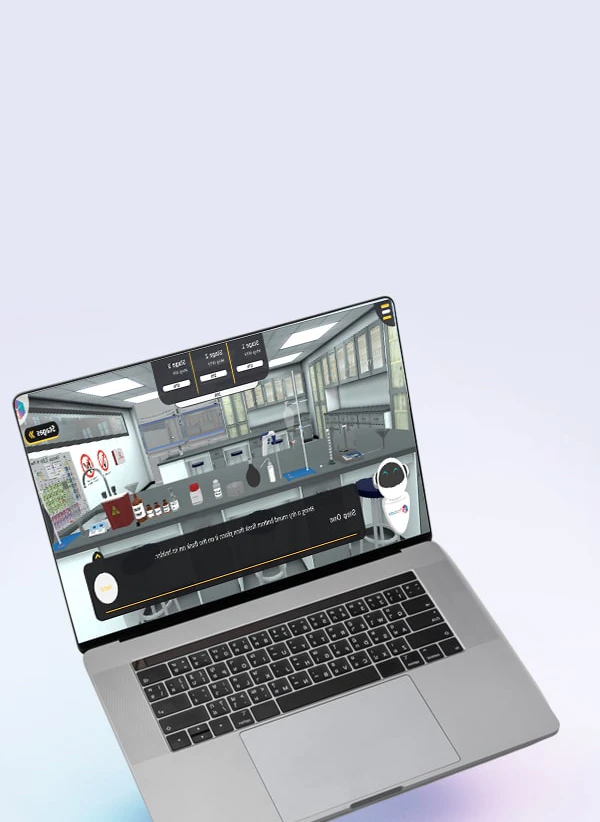
Enhance student engagement and learning outcomes with gamified virtual lab simulation—featuring instant reporting, a built-in question bank, and seamless LMS integration

Give students hands-on science experiences in safe, realistic 3D environments—featuring game-like simulations that build real lab skills and meet curriculum needs. indian wife forced feminised husband story repack

Empower your students with real-time, personalized guidance —while you get actionable insights and content recommendations for every experiment The primary appeal of this genre often lies

Easily create quizzes with custom questions, types, difficulty, and timing. Link them to lab experiments, and let PraxiLabs handle instant grading and feedback control—all in one place. such as an Indian household

Track every student’s actions and completions in real time, and access automated performance reports to support smarter teaching decisions.

Connect to Moodle, Canvas, Blackboard, and more—in just 24 hours, with zero IT hassle and no extra cost. Stay in control while saving your team time and resources.

Reach visual, auditory, and kinesthetic learners with multimedia content, voice guidance, and interactive simulations—all on one platform.

1
Create Free Account
Register in seconds—no hardware or credit card needed. Try 3 full simulations and explore core platform features.
2
Book Institutional Demo
Schedule a personalized walkthrough for your institution. Preview all features, ask questions, and request a custom quote.
3
Unlock the Right Plan
Pick the plan that fits your curriculum—access 210+ simulations or select a specific virtual science lab, plus quiz builder and LMS integration.

Didn't find the simulation you need? No problem! We’ll customize the experiment to fit your curriculum in any language (upon request).
Our dedicated training team is always available to help your institution’s staff unlock the full potential of our virtual lab features.

Our expert support team is available around the clock for troubleshooting, onboarding, or technical help. We're always here to guide you.
The primary appeal of this genre often lies in the contrast it provides against traditional societal structures. In many cultures, gender roles are clearly defined. By narratively flipping these roles—where a wife takes on a dominant, guiding persona and the husband adopts more traditionally feminine traits—the stories create a high-stakes environment for psychological exploration.
Understanding the "Role Reversal" Narrative in Fictional Contexts
In these collected stories or "repacks," several recurring themes often appear:
The interest in these specific fictional tropes highlights a fascination with the boundaries of gender and power. By re-imagining the domestic sphere, these stories provide a space to explore vulnerability and the complexities of modern relationships through a unique cultural lens.
This article explores the popular fictional trope found in erotic and romantic literature known as "forced feminisation" or "husband feminisation" (HF). It discusses the psychological appeal, common narrative beats, and the community surrounding these stories.
Beyond the physical change, these stories often delve into the internal monologue of the characters, exploring how the relinquishing of traditional authority affects the husband's sense of self.
While the narratives may use "forced" as a stylistic hook to heighten drama, they typically function as a fictional exploration of power-exchange and domestic roleplay.
In the landscape of niche contemporary fiction, stories exploring shifted power dynamics within a marriage have gained a dedicated following. When set within specific cultural frameworks, such as an Indian household, these narratives—often categorized under "husband feminisation"—offer an exploration of identity, traditional expectations, and the subversion of social norms. The Cultural Backdrop: Exploring Tradition
A central focus is often the gradual change in the husband's appearance. This might involve transitioning from standard attire to more elaborate, traditional feminine clothing and accessories.
Readers often seek out "repacks" or anthologies because they provide a comprehensive look at these themes. These collections allow for a broader view of how different authors interpret the "role-reversal" trope, ranging from lighthearted romantic comedies to more intense psychological dramas. Conclusion

For universities and educational institutions

210+
Virtual Science Lab Simulations Available

20+
Science Branches Covered

11
Globally Recognized Awards in Science Education

160+
Countries around the globe

24/7
Tech Support Available Anytime

24
Hours to Set Up Free LMS Integration
Over 10 Global Awards for Advancing Science Education and Student Engagement
The primary appeal of this genre often lies in the contrast it provides against traditional societal structures. In many cultures, gender roles are clearly defined. By narratively flipping these roles—where a wife takes on a dominant, guiding persona and the husband adopts more traditionally feminine traits—the stories create a high-stakes environment for psychological exploration.
Understanding the "Role Reversal" Narrative in Fictional Contexts
In these collected stories or "repacks," several recurring themes often appear:
The interest in these specific fictional tropes highlights a fascination with the boundaries of gender and power. By re-imagining the domestic sphere, these stories provide a space to explore vulnerability and the complexities of modern relationships through a unique cultural lens.
This article explores the popular fictional trope found in erotic and romantic literature known as "forced feminisation" or "husband feminisation" (HF). It discusses the psychological appeal, common narrative beats, and the community surrounding these stories.
Beyond the physical change, these stories often delve into the internal monologue of the characters, exploring how the relinquishing of traditional authority affects the husband's sense of self.
While the narratives may use "forced" as a stylistic hook to heighten drama, they typically function as a fictional exploration of power-exchange and domestic roleplay.
In the landscape of niche contemporary fiction, stories exploring shifted power dynamics within a marriage have gained a dedicated following. When set within specific cultural frameworks, such as an Indian household, these narratives—often categorized under "husband feminisation"—offer an exploration of identity, traditional expectations, and the subversion of social norms. The Cultural Backdrop: Exploring Tradition
A central focus is often the gradual change in the husband's appearance. This might involve transitioning from standard attire to more elaborate, traditional feminine clothing and accessories.
Readers often seek out "repacks" or anthologies because they provide a comprehensive look at these themes. These collections allow for a broader view of how different authors interpret the "role-reversal" trope, ranging from lighthearted romantic comedies to more intense psychological dramas. Conclusion