Open source RGB lighting control that doesn't depend on manufacturer software


One of the biggest complaints about RGB is the software ecosystem surrounding it. Every manufacturer has their own app, their own brand, their own style. If you want to mix and match devices, you end up with a ton of conflicting, functionally identical apps competing for your background resources. On top of that, these apps are proprietary and Windows-only. Some even require online accounts. What if there was a way to control all of your RGB devices from a single app, on both Windows and Linux, without any nonsense? That is what OpenRGB sets out to achieve. One app to rule them all.


Version 1.0rc2, additional downloads and versions on Releases page

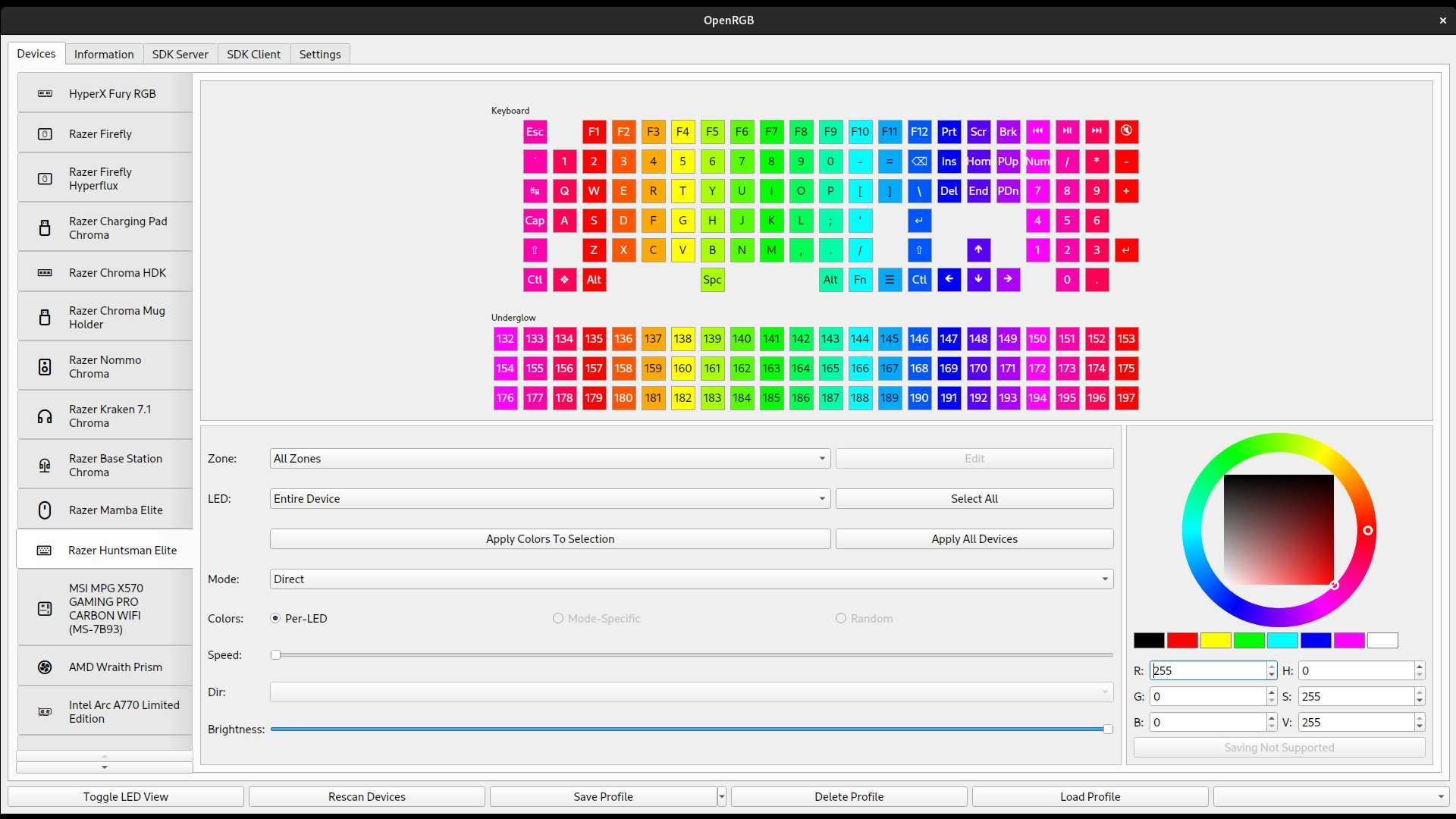
OpenRGB user interface

Control RGB without wasting system resources

Lightweight User Interface

OpenRGB keeps it simple with a lightweight user interface that doesn't waste background resources with excessive custom images and styles. It is light on both RAM and CPU usage, so your system can continue to shine without cutting into your gaming or productivity performance.
OpenRGB rules them all

Control RGB from a single app

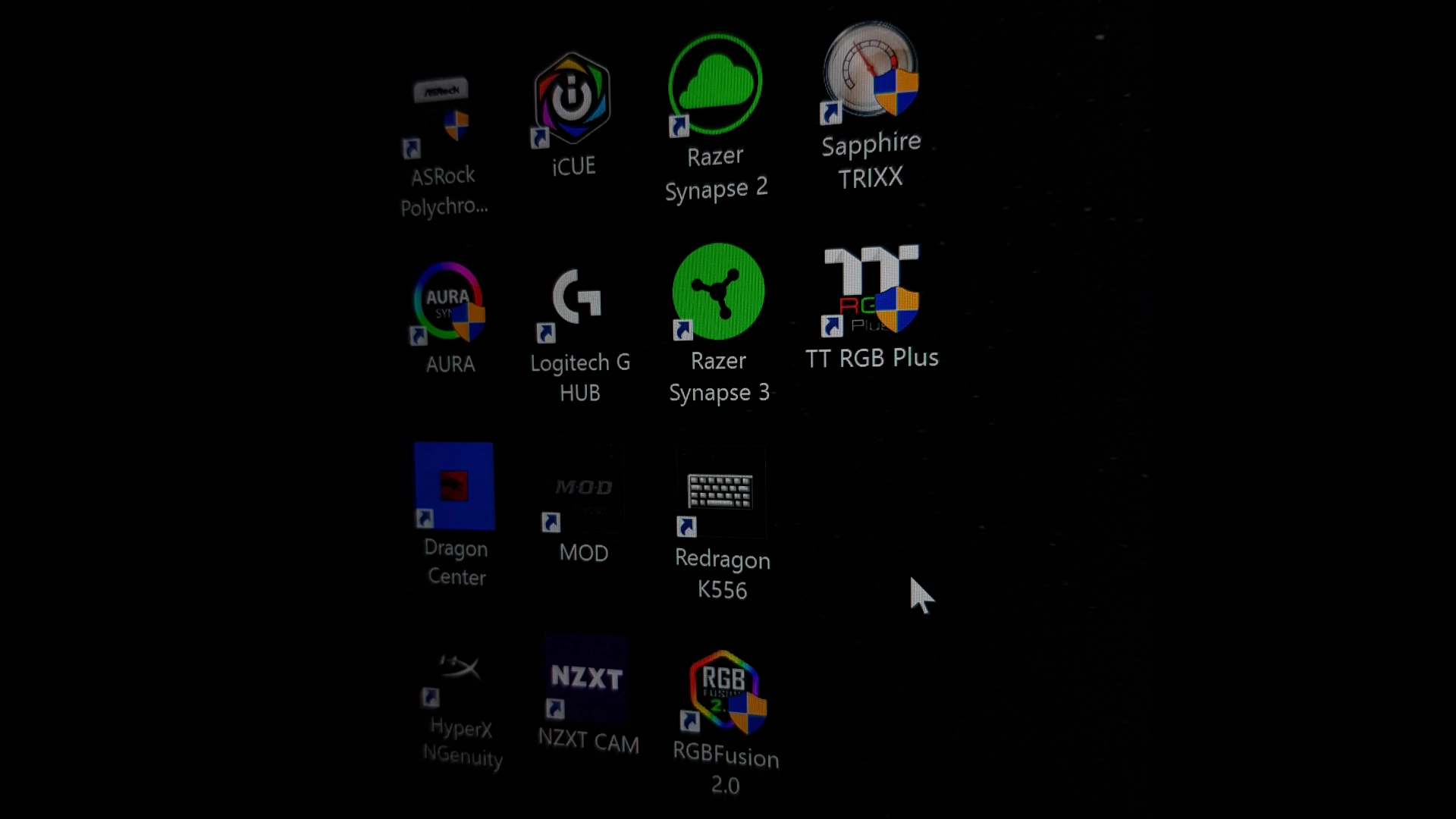
Eliminate Bloatware

If you have RGB devices from many different manufacturers, you will likely have many different programs installed to control all of your devices. These programs do not sync with each other, and they all compete for your system resources. OpenRGB aims to replace every single piece of proprietary RGB software with one lightweight app.

OpenRGB is open source software

Contribute your RGB devices

Open Source

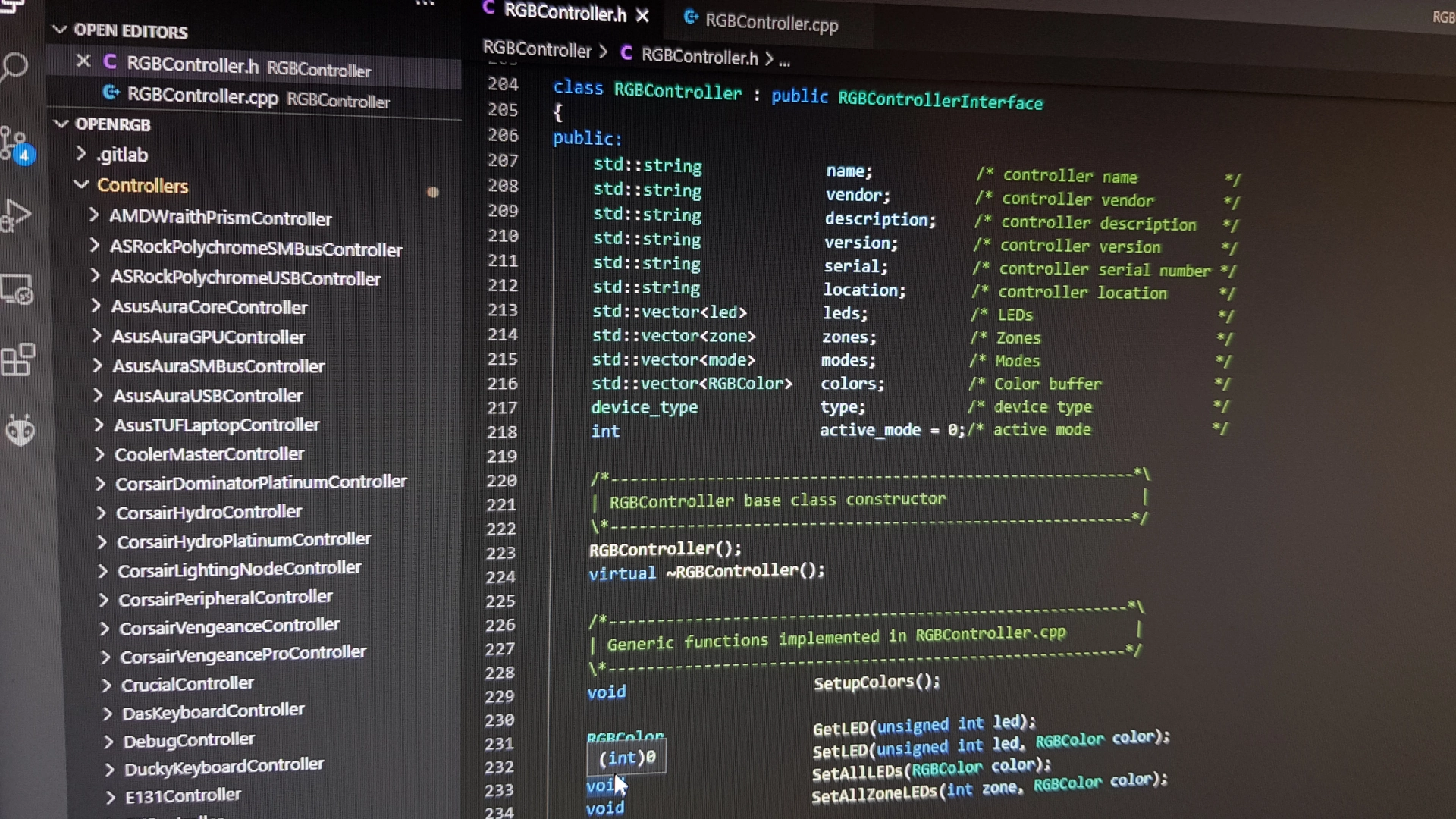
OpenRGB is free and open source software under the GNU General Public License version 2. This means anyone is free to view and modify the code. If you know C++, you can add your own device with our flexible RGB hardware abstraction layer. Being open source means more devices are constantly being added!


Check out the source code on GitLab
OpenRGB is Cross-Platform

Control RGB on Windows, Linux, and MacOS

Cross-Platform

OpenRGB runs on Windows, Linux and MacOS. No longer is RGB control a Windows-exclusive feature! OpenRGB has been tested on X86, X86_64, ARM32, and ARM64 processors including ARM mini-PCs such as the Raspberry Pi.

Parinda 1989 ★ Proven & Validated

The murder of their childhood friend, Inspector Prakash (Anupam Kher), by the psychotic gang leader Anna (Nana Patekar) shatters this illusion.

Renu Saluja's sharp, rhythmic editing—specifically in sequences involving the flight of pigeons—added a poetic layer to the visceral violence. parinda 1989

Karan decides to infiltrate Anna’s gang to avenge his friend, leading to a tragic collision between family loyalty and moral justice. The murder of their childhood friend, Inspector Prakash

The film explores themes of , moral ambiguity , and the shattering of urban dreams . It portrays Mumbai not just as a city, but as a "giant home of spatial anxiety" and ruin. Groundbreaking Technical Craft The film explores themes of , moral ambiguity

Binod Pradhan utilized a "noir" style, focusing on shadows, dark spaces, and atmospheric lighting inspired by the works of Van Gogh and Rembrandt.

Released on November 3, 1989, Parinda (transl. "Bird") is widely regarded as a watershed moment in Indian cinema that fundamentally redefined the gangster genre. Directed and produced by Vidhu Vinod Chopra, the film bridged the gap between gritty "Parallel Cinema" realism and mainstream Bollywood sensibilities, earning it a place as India's official entry for the 1990 Academy Awards . Narrative and Themes